
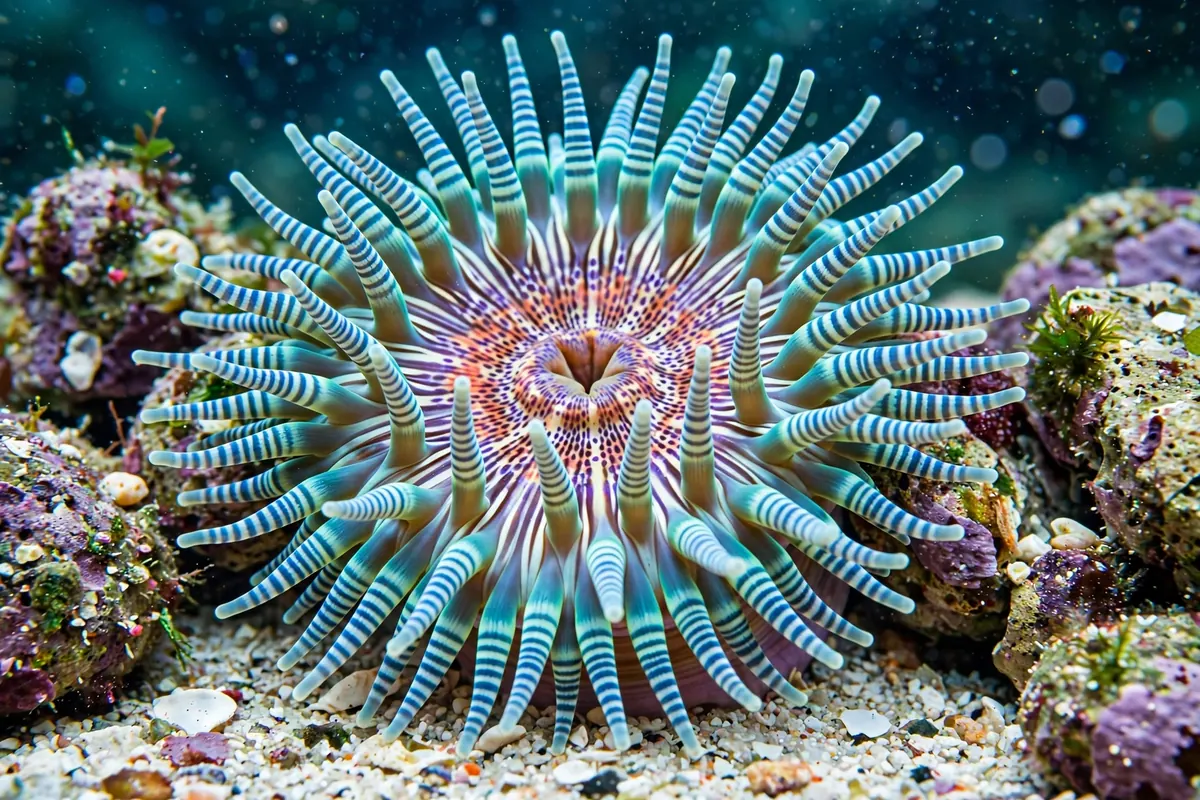
The rock flower anemone — also known simply as the rock anemone — is one of the most popular invertebrates in the reef-keeping hobby. With its vivid, almost psychedelic colour patterns and a reputation for being hardy and easy to keep, Epicystis crucifer is often recommended as a first anemone for saltwater aquarists. Here is everything you need to know about caring for one.
What Is a Rock Flower Anemone?
The rock flower anemone is a species of sea anemone scientifically known as Epicystis crucifer. It is native to the warm waters of the Caribbean and western Atlantic, where it anchors itself to rocks and rubble in sandy areas of the reef. In the aquarium trade it is sold under several names — rock flower anemone, rock anemone and flower anemone all refer to the same animal.
Its defining feature is a colourful, differentiated oral disc ringed with short, stubby tentacles, often in contrasting banded patterns. Specimens come in an enormous range of colours: greens, browns, tans, purples, blues and reds, with many individuals showing striking multi-colour combinations. They typically reach a few inches across, making them one of the smaller anemones kept in reef tanks.
Quick Care Summary
- Care level: Easy
- Temperament: Semi-aggressive
- Diet: Carnivore
- Reef safe: Yes
- Minimum tank size: 30 gallons (about 115 litres) — some guides accept 20 gallons
- Lighting: Moderate to high
- Water flow: Moderate
- Placement: Sandy bed or rock crevices, middle to upper tank
Tank Requirements
Stability matters more than any single number. Rock flower anemones dislike sudden swings in water chemistry, so a mature, well-cycled tank is essential — do not add one to a brand-new setup. Most marine retailers recommend a minimum tank of 30 gallons (around 115 litres); larger volumes are simply more chemically stable. Keep these parameters steady:
- Temperature: 75–80°F (24–27°C)
- Salinity: 1.024–1.026 specific gravity
- pH: 8.1–8.4
Regular water changes and reliable filtration help maintain these conditions. A neglected, dirty tank will stress an anemone quickly.
Lighting and Water Flow
Rock flower anemones do best under moderate to high lighting — LED or T5 lighting with a PAR in the roughly 80–150 range suits most specimens. Unlike some anemones and corals, they do not need blazing light, but avoid placing them under intense illumination suddenly: bleaching is a real risk, so acclimate gradually and ramp light levels up slowly.
Water flow should be moderate and steady — enough to deliver food particles and keep the anemone’s surface free of debris, but not so strong that the animal lets go and drifts around the tank. Aim powerheads so the tentacles sway gently rather than folding over under force.
Placement: Sand, Rock and a Spot of Their Own
Unlike wandering anemones such as bubble tips, rock flowers are notably stationary. Once settled, they rarely move. They anchor their foot to rockwork or bury themselves into a sandy substrate so that only the oral disc and tentacles are visible. Provide plenty of live rock with shady crevices and a sandy bed, and give the anemone a few days of gentle light and moderate flow while it chooses its spot.
One important caution: keep rock flower anemones away from other anemones and aggressive corals. They can sting, and chemical warfare between neighbours is bad news for the whole tank. Give each specimen its own territory.
Feeding a Rock Flower Anemone
Rock flower anemones are complete carnivores. In the wild they capture small prey with their tentacles; in captivity they accept chopped mussels, fish meat, mysis shrimp and other frozen meaty foods. Target-feed two to three times per week using a pipette or turkey baster, and they will also pick up food during broadcast feedings.
Regular small doses of iodine and trace elements support long-term health. Quarantining a new anemone before adding it to the display tank is sensible — newly imported animals can lose tentacles during acclimation, so introduce them slowly by floating the bag and mixing tank water in gradually over about an hour.
Compatibility With Other Reef Inhabitants
Rock flower anemones are considered reef safe: they do not eat corals. Small, peaceful fish — including clownfish, which may occasionally associate with them — make good tank mates. Their semi-aggressive temperament mainly means they will sting anything that touches them, so avoid pairing them with curious or clumsy species, and never crowd several anemones together.
Signs of a healthy specimen include a firm attachment to the substrate, vibrant colour, and tentacles that react quickly to food. Regular expansion and contraction is normal behaviour, not a cause for alarm.
FAQs About Rock Flower Anemones
Are rock flower anemones good for beginners?
Yes — they are widely regarded as one of the easiest anemones to keep. They are hardy, relatively stationary, tolerant of a range of lighting, and do not demand the intense light that many corals need.
Do rock flower anemones sting?
Yes, they have stinging cells like all anemones, and they can sting neighbouring corals or other anemones. Give them space, and handle with care during tank maintenance.
How often should I feed my rock flower anemone?
Target-feeding every two to three days keeps them in good condition, with portions of small meaty foods. Adjust frequency based on the animal’s response and overall condition.
Will a rock flower anemone move around the tank?
It may wander briefly after introduction until it finds a spot it likes, but once settled it usually stays put — one of the traits that makes it so popular with reef keepers.
